What is on your roof—and is it ready for wind and rain?
Roof materials, installation and condition work together. A wind rating alone cannot tell the whole story.
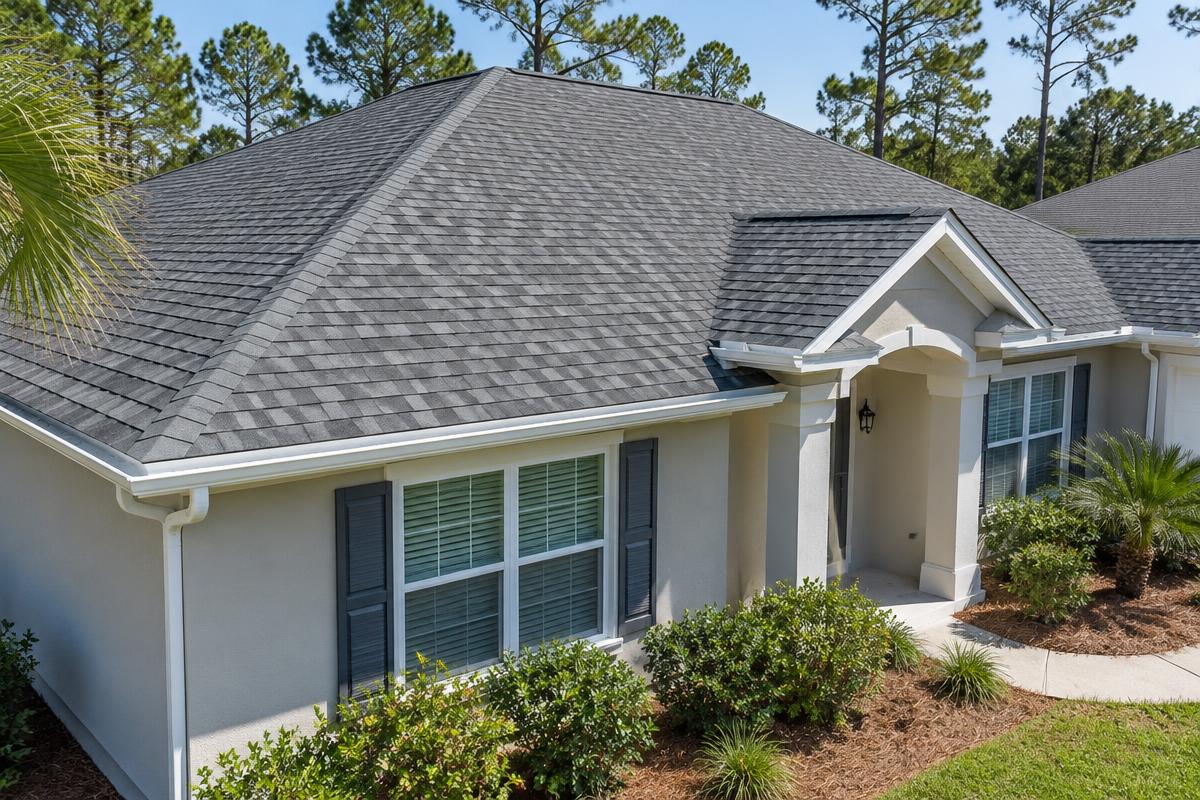
Start with records and a ground-level look
Find your roofing invoice, product information, warranty and any inspection records. From the ground, look for missing or displaced materials, damaged gutters and branches touching the roof. Stains indoors or recurring leaks deserve professional attention. Do not climb onto a roof to investigate, especially after rain or strong winds.
Ask about the whole roof system
A material’s tested wind rating is not a promise that your roof will survive a particular storm. Fastening, decking, flashing, edges, underlayment and connections all affect performance. Have a qualified roofing professional explain the applicable requirements and assess condition. Avoid converting a product rating into a guaranteed hurricane category or wind speed for your house.
Keep tree risks separate from roofing work
A limb over the roof is a tree concern as well as a possible source of debris. Plan tree assessment before storm warnings, not during dangerous weather. Kolbeck’s Tree Care can help with tree work; roofing and structural inspections belong with qualified specialists. Keep photos and maintenance records, and ask your insurer what documentation it requires rather than assuming a discount.
Further reading
- https://ibhs.org/guidance/homedisasterguides/
- https://www.noaa.gov/strengthen-your-home-hurricane-preparedness
Kolbeck's Tree Care · Educational guidance. Illustrative AI-generated image.
Request a tree-service estimate